Beaches Around Tavira
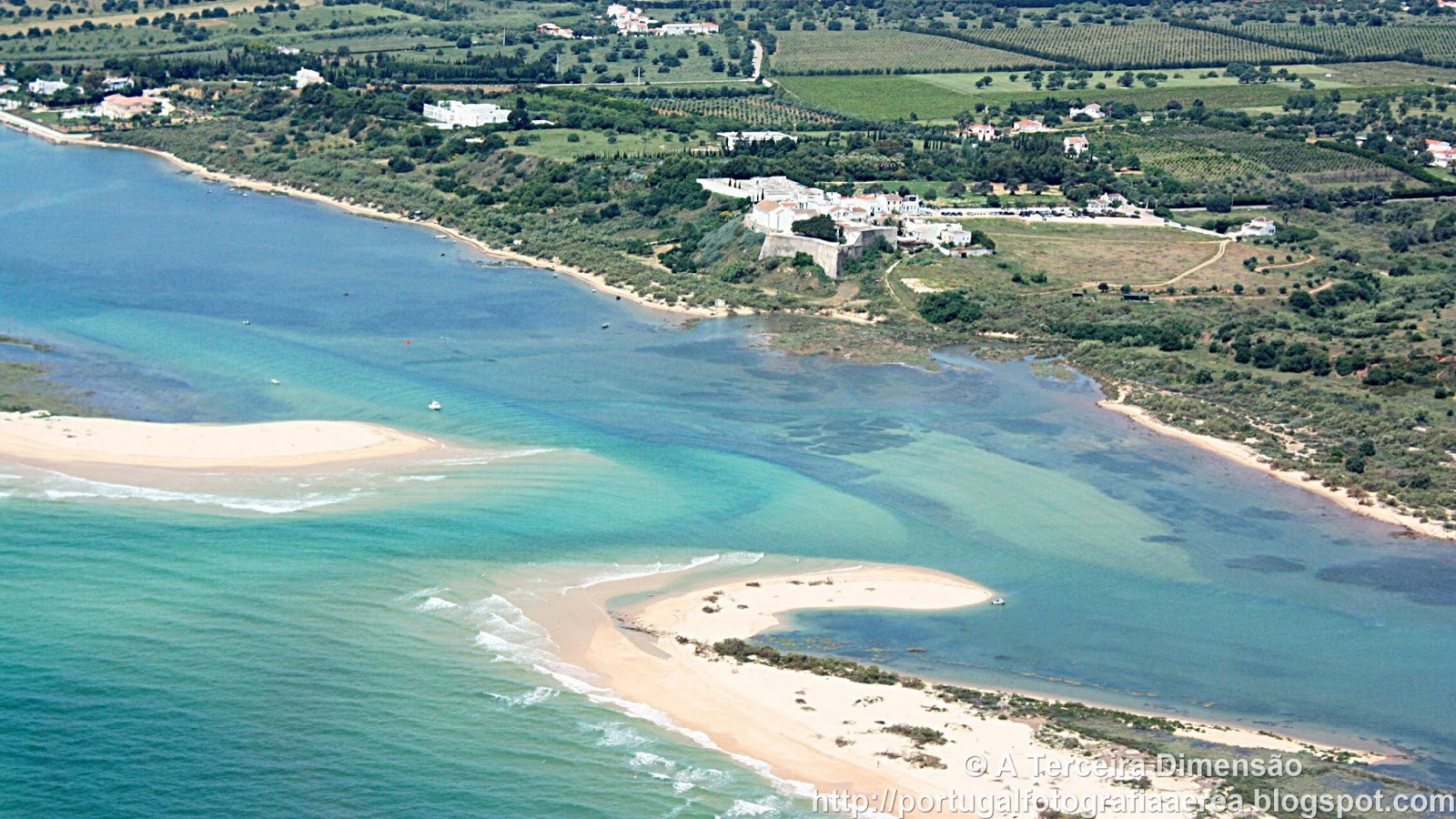
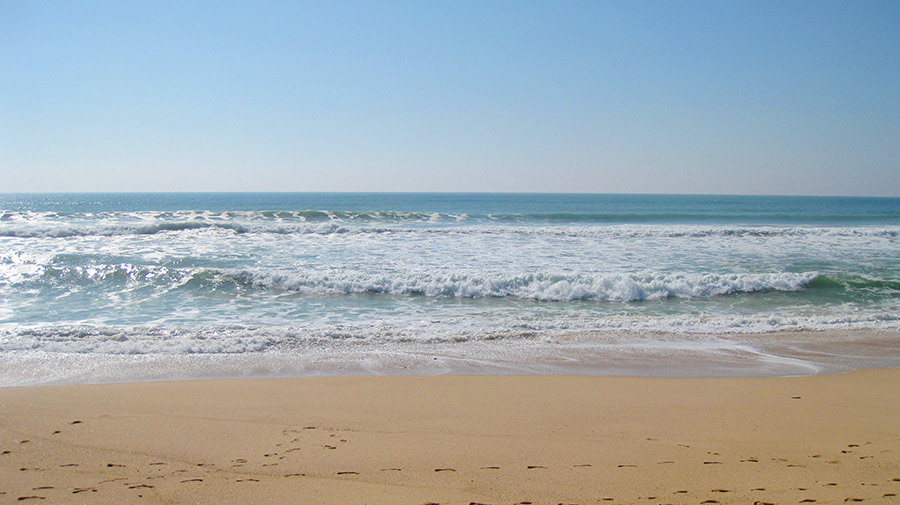
Tavira lies in the heart of the Sotavento — the "Leeward Side", also known as the Sandy Algarve. This eastern Algarve coast remains far less developed than the rocky coastline west of Faro. Offshore barrier islands shield the coast from the full force of the Atlantic: the Ria Formosa — a UNESCO Biosphere Reserve — separates the mainland from the long beach islands and provides a habitat for flamingos, ospreys, and rare seabirds.
Venture just a few minutes from the ferry landings and crossings, and you"ll find deserted beaches even in high season. As this is an Atlantic coast with tides, and the main shipping lane lies far offshore, the water and beaches are exceptionally clean — no tar, no oil residue, no algae blooms, no jellyfish. Every beach carries the Blue Flag of the European Foundation for Environmental Education for cleanliness and water clarity.
The interactive map at the bottom of the page shows all beaches at a glance.
🏖 Praia da Ilha de Tavira
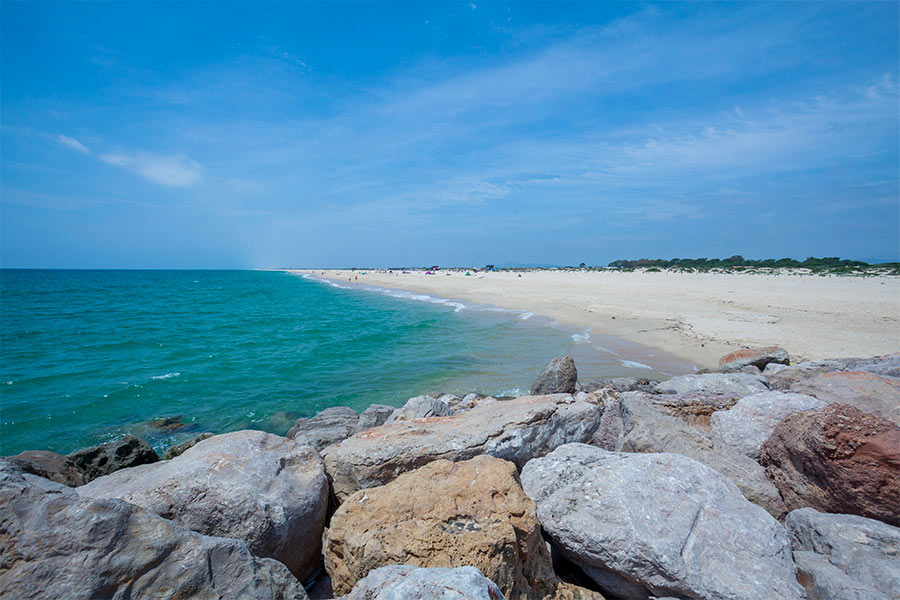
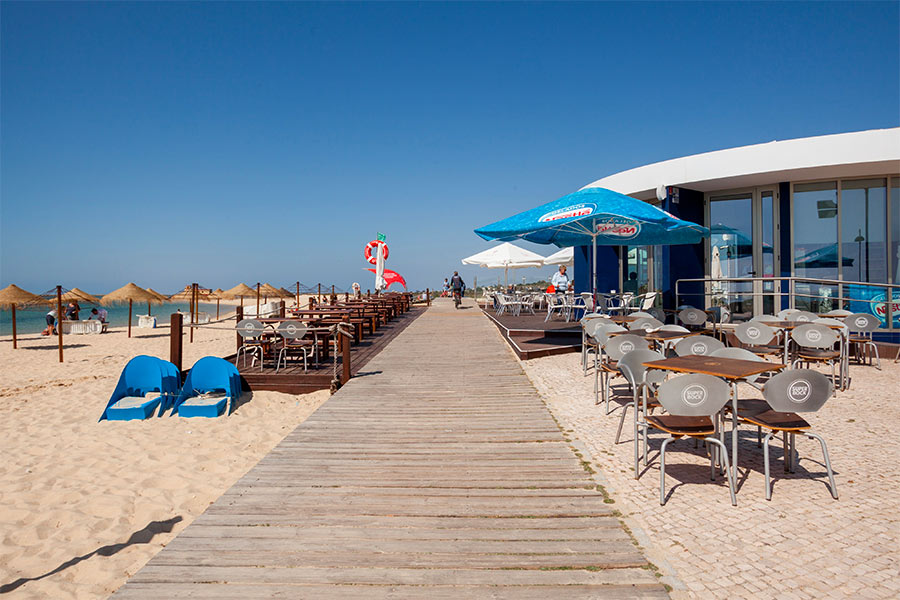
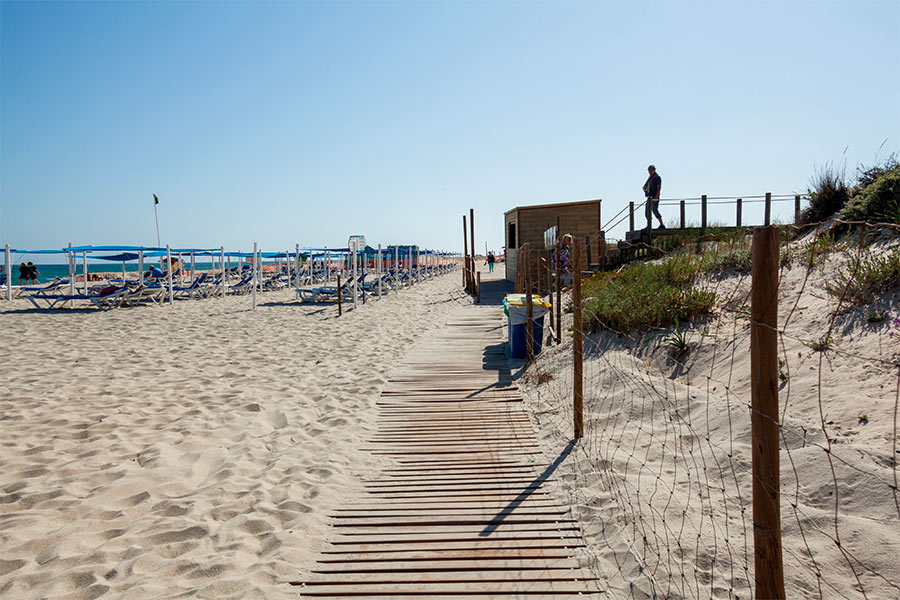
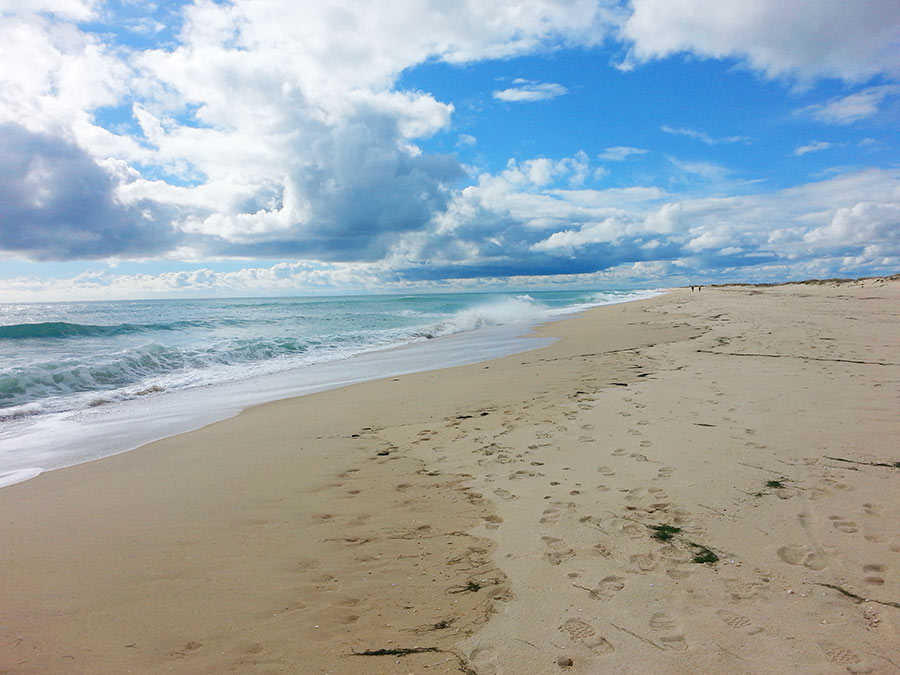
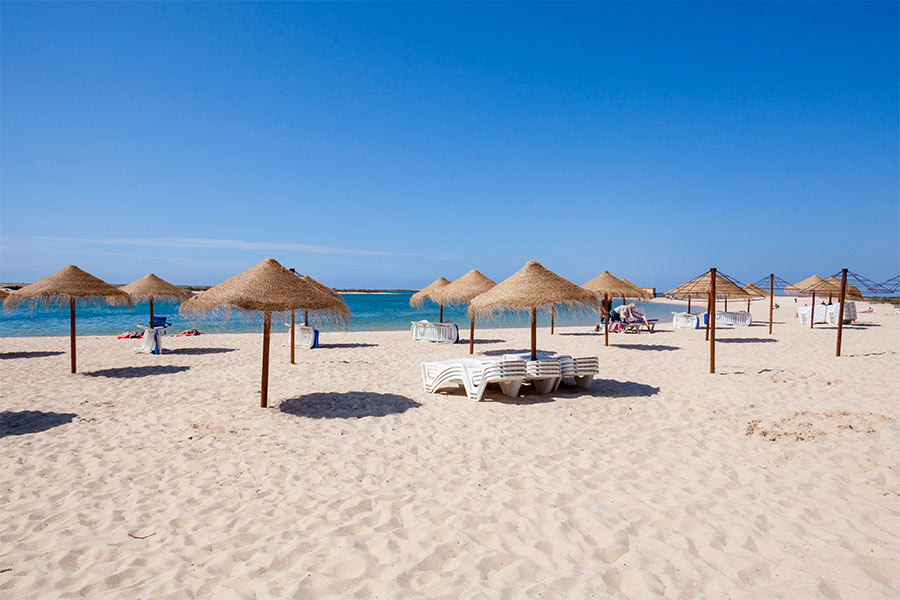
The region's main beach and the finest destination for all guests. Ilha de Tavira is a barrier island stretching over 11 km, with fine white sand, turquoise water, and sand dunes rather than rocky cliffs — a rare combination on the Algarve. The water is shallow and clean, the beach expansive enough to find a quiet spot even in the height of summer. Walk ten minutes westward and you'll often have the beach entirely to yourself.
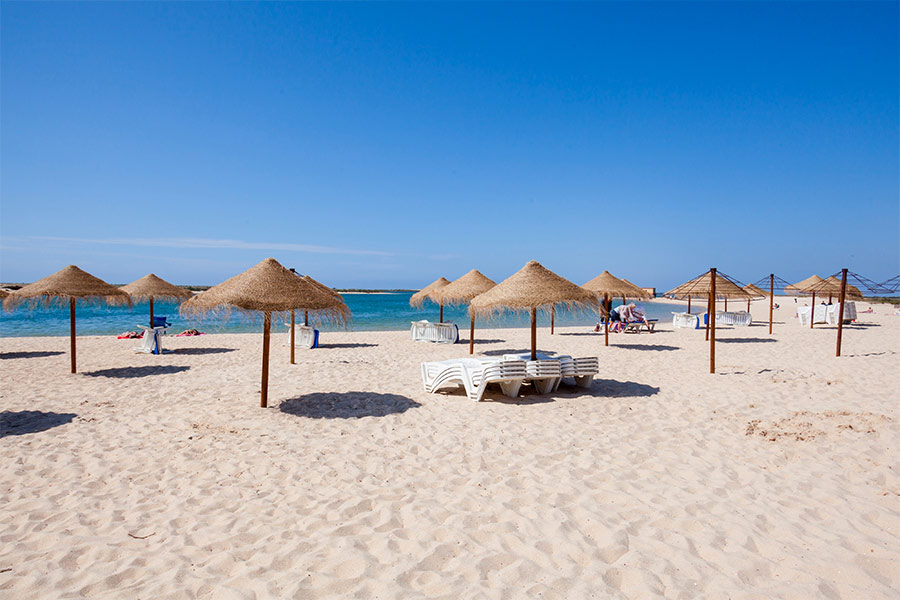
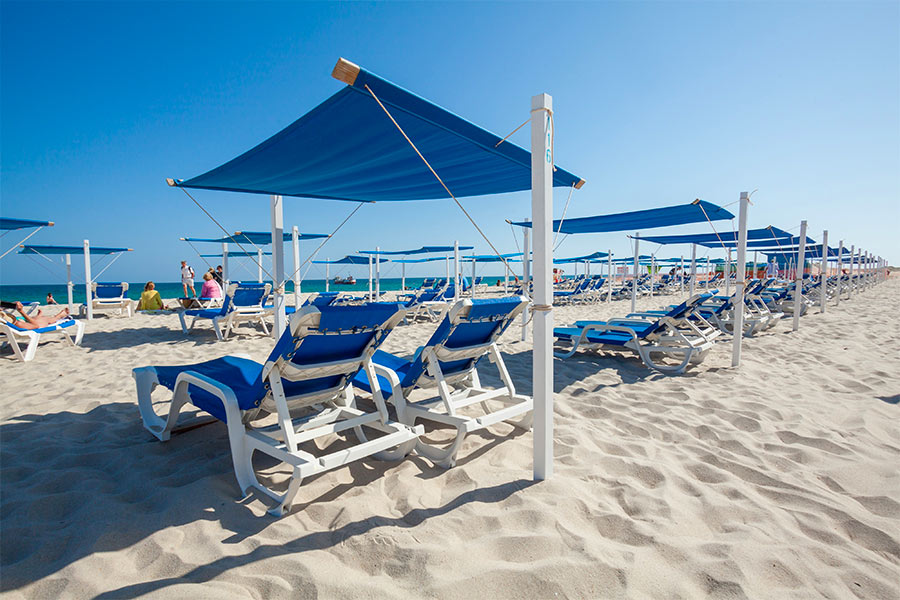
Facilities: Sun loungers & parasols for hire (~€15/day), restaurants, bars, showers, lifeguards in summer, water sports (jet ski, banana boat).
Getting there — three ways:
- 🚶 Walk to the pier + island boat: From the holiday house, approximately 15 minutes on foot to the boat pier in the town centre. From there, take the island boat or water taxi down the Rio Gilão through the beautiful lagoon — a picturesque 20-minute journey to the island.
- 🚗 By bus, car, or bicycle to Quatro Águas (2 km south of Tavira): Ferry crossing. About 30 minutes total. Car park available, departures every 30 minutes in summer.
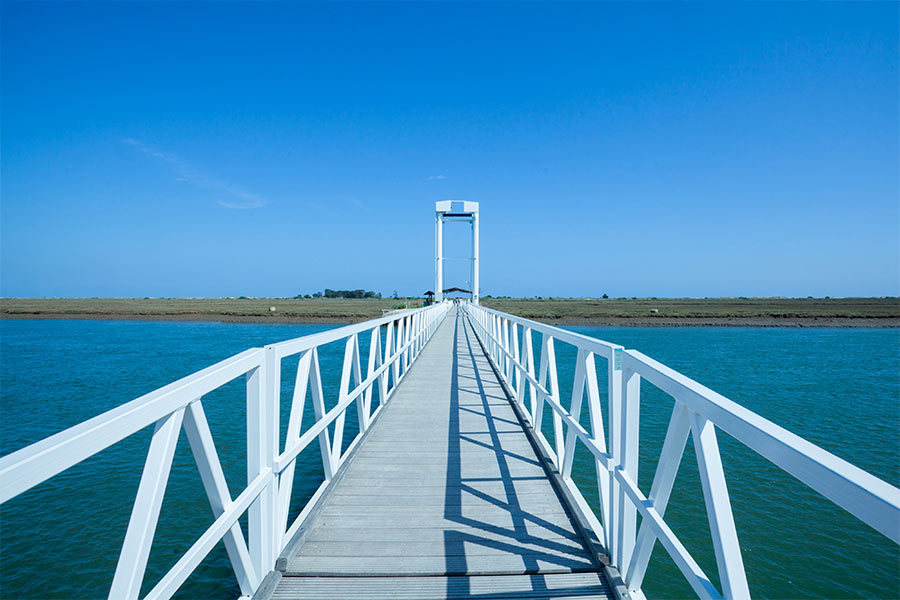
- 🚗 By car to Pedras d'el Rei (approx. 6 km, 10 minutes): Free car park, then across the footbridge onto the island — 15 minutes on foot or a few minutes aboard the charming narrow-gauge island train to Praia do Barril.
<div style='position:relative; padding-bottom:56.25%; height:0; overflow:hidden; margin:1.5rem 0; border-radius:8px;">
🏖 Praia do Barril
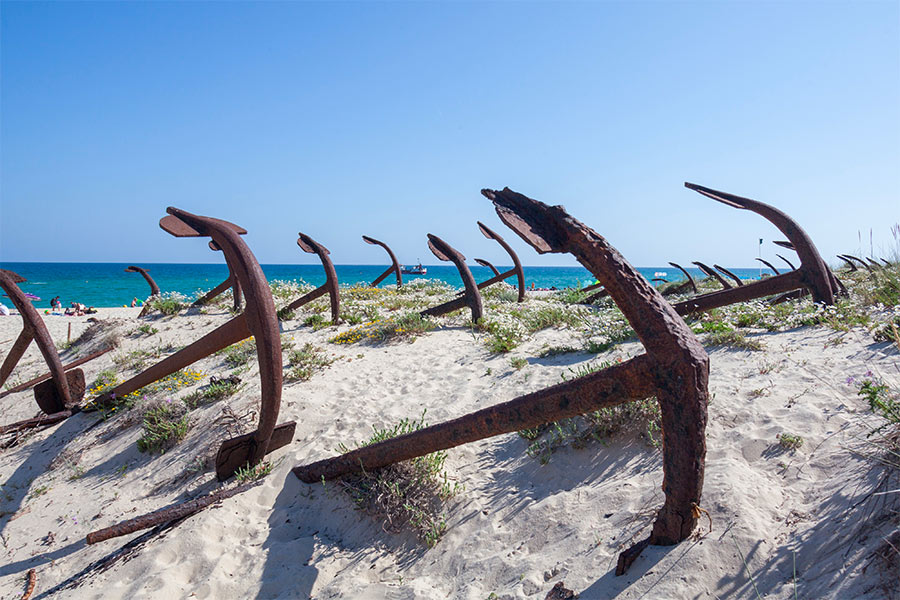
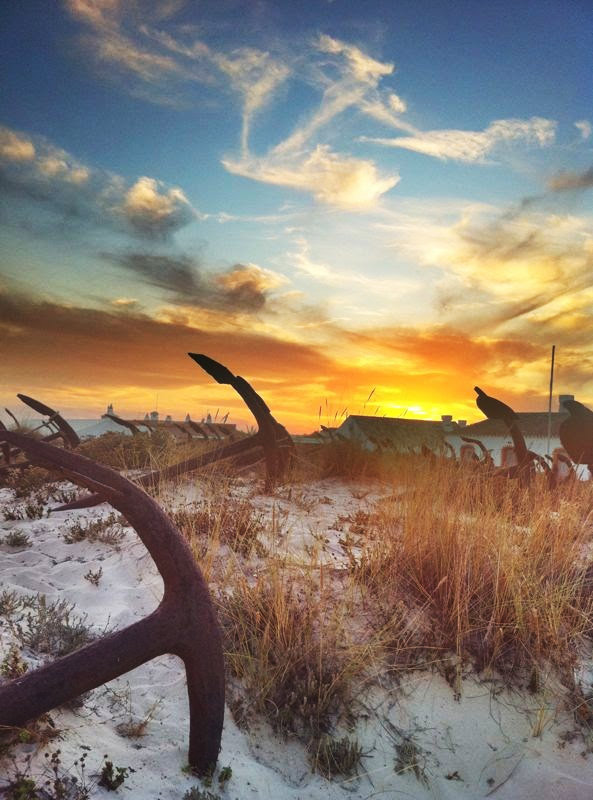
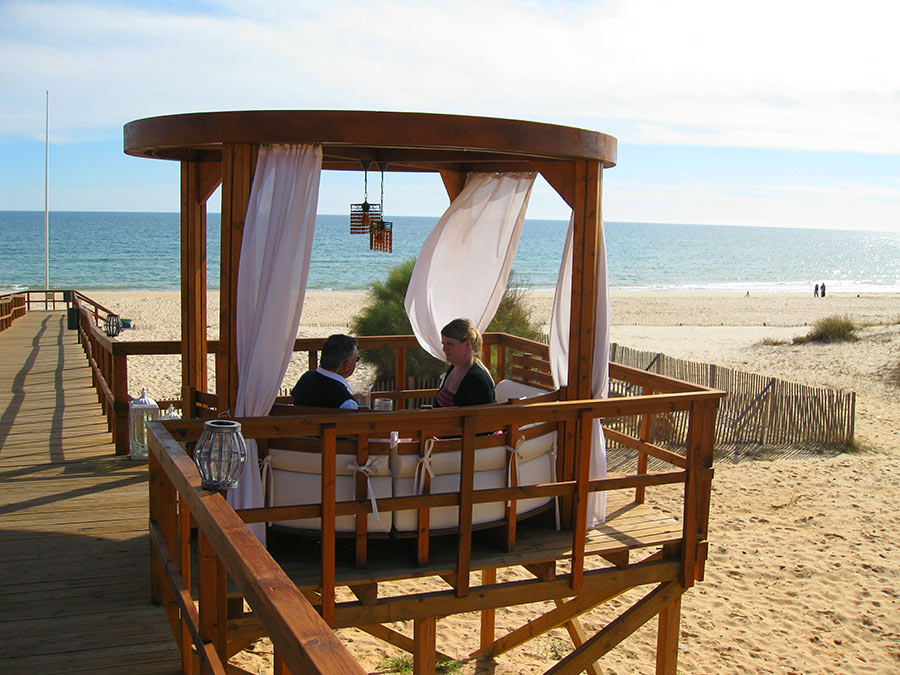
The most romantic beach in the region — with a story you won"t forget. Praia do Barril was once an important tuna fishing village. Today, the old fishermen's houses still stand, converted into cafés and restaurants right on the beach. The landmark: the anchor cemetery — over 100 rusted ship anchors standing in the dune sand, a silent memorial to the tuna fishing of bygone times.
The beach itself is wide, peaceful, and less visited than Ilha de Tavira — ideal for those who want beach holidays without the crowds.
Facilities: Restaurants & bars in the former fishermen's houses, showers, parasols, lifeguards in summer.
Getting there:
- By car: N125 towards Luz de Tavira, then follow signs to Santa Luzia / Pedras d'el Rei. Large car park at Pedras d'el Rei (free).
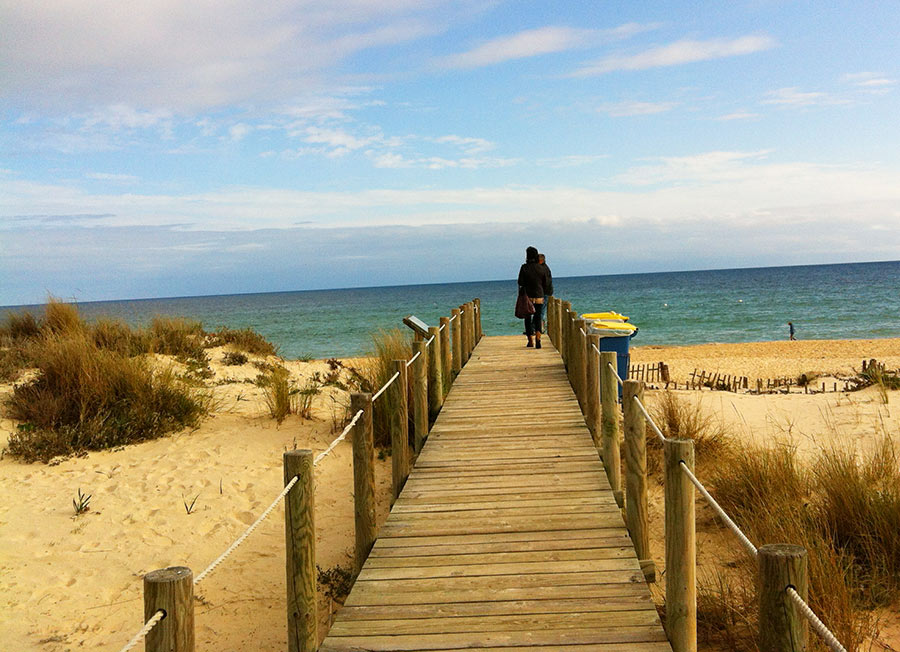
- Footbridge + island train: From Pedras d'el Rei across a wooden bridge onto the island — in summer, the miniature train covers the 1.2 km to the beach. Outside the season, it's about 15 minutes on foot.
- Beach walk: From Ilha de Tavira westward, approximately 40 minutes.
🏖 Praia de Cabanas
A quieter hidden gem east of Tavira. Cabanas de Tavira sits right on the lagoon shore — a short ferry ride takes you to the island village beach of the same name. Less infrastructure, more authenticity. The water here is particularly warm, as the lagoon retains the sun's heat more than the open sea.
Facilities: Beach cafés, showers, lifeguards in high summer.
Getting there:
- By car: From Tavira, N125 eastward; after about 8 km, exit at Cabanas de Tavira. Parking along the waterfront.
- Ferry: Regular boat crossings in summer, departing directly from Cabanas.
🏖 Praia de Cacela Velha
One of the most beautiful and unspoiled beaches on the Algarve — chosen by Condé Nast Traveler as one of the world's finest beaches, listed by the Guardian among Europe's top 10 hidden gems. The picturesque village of Cacela Velha sits on a hilltop with panoramic views over the lagoon and beach. The water is shallower and warmer than elsewhere; sandbars and tidal islands form and reform with each tide.
Cacela Velha itself is tiny — a 16th-century church, a dozen houses, a small Moorish fort, and that breathtaking view. A visit before or after your beach day is a must.
Facilities: Small beach café, parasols for hire, lifeguards in high summer. Bring snacks and water.
Getting there:
- By car: N125 approximately 15 km eastward to the Cacela Velha exit. Small car park in the village.
- By boat: Boat crossing in summer, or at low tide you can wade through the lagoon.
- By bus: Line 67 (Vamus) from Tavira towards Vila Real, stop at Cacela.
🏖 Praia de Manta Rota
The most convenient beach in the region — directly accessible by car, large car park, restaurants and bars right on the beach. Manta Rota lies about 30 km east of Tavira, near the Spanish border. No ferry, no miniature train — simply drive there and go.
Facilities: Several restaurants & bars, parasols, lifeguards, water sports, car park (paid in high summer).
Getting there:
- By car: N125 eastward to Altura/Manta Rota, follow signs. Approximately 30 minutes from Tavira.
<div style='position:relative; padding-bottom:56.25%; height:0; overflow:hidden; margin:1.5rem 0; border-radius:8px;">
Practical Tips
- Many more beaches: Praia de Fuseta, Praia de Monte Gordo, and numerous other coves are also easily reachable by car, bicycle, or bus.
- Best time to visit: May to September — from October onwards it"s quieter, with golden light and warm seas.
- Best time of day: Morning (before 10 am) or evening (from 5 pm) — quieter and more beautiful light.
- Sunscreen: Factor 50+ — the Algarve sun is stronger than you'd think.
- Ferry times: Frequent in summer, reduced outside the season — check ahead.
- With children: Ilha de Tavira and Barril are ideal — shallow, clean water, lifeguards on duty.
- Nature conservation: The Ria Formosa is a national park — no camping on the islands, no fires, stay off the dunes.